
Outdoor Media
Software for Out-of-Home Media Owners
Availability lives in a spreadsheet, proof of display sits on a phone, and invoices drift out of step with what was booked.
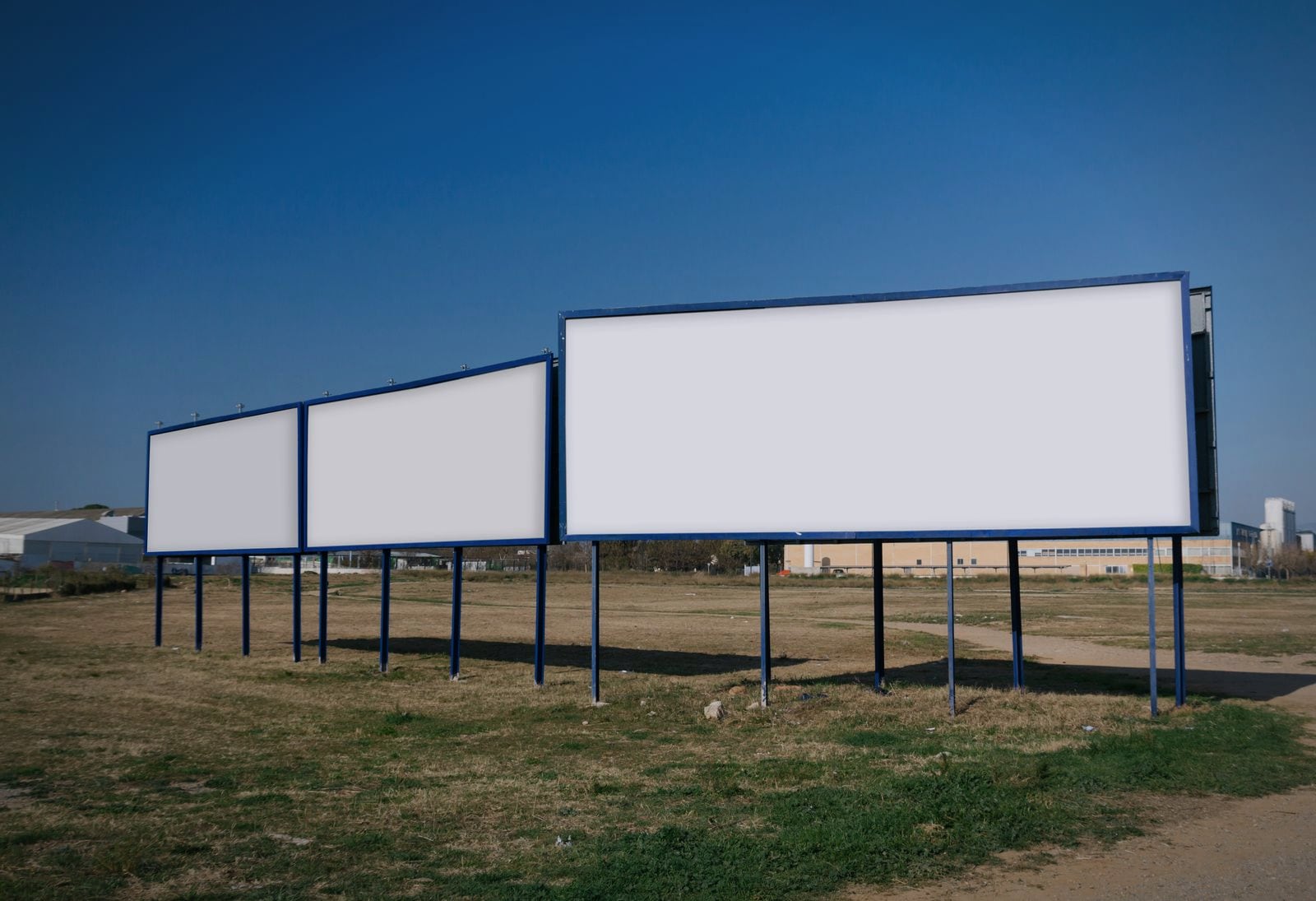
Out-of-home media is an inventory business that most operators still run on spreadsheets. The structures are physical and finite, availability changes with every booking, and the proof that a campaign ran lives on somebody’s phone.
What an out-of-home operator is actually managing
A media owner does not sell a product. It rents attention at a fixed location for a defined window, and the thing it rents is finite in a way a manufactured product never is: a face committed for March cannot be sold again for March, and a March that passes unsold is gone.
The sellable unit is not the structure. It is a face, for a period, at a rate. One unipole is a single asset and two pieces of inventory, because the two faces point in opposite directions and the one catching traffic into the city is routinely worth more than the one catching traffic out. Recording bookings against the site rather than the face is the most common modelling error in this trade, and it is not cosmetic — a campaign covering four hoardings leaves three surfaces looking free to whoever asks next. We wrote up what that looks like in a real schema.
The portfolio is also more varied than a spreadsheet column suggests. Terrace and compound-wall hoardings, unipoles, gantries spanning a carriageway, pole kiosks sold as a route rather than singly, backlit bus shelter panels held under a municipal contract, building wraps priced per square foot, and LED screens sold as seconds in a loop rather than as a month of display. Each has a different unit of sale. A system that only understands one site for one month cannot hold half of them, and the formats and the sizes they tend to be built at are conventions rather than standards, so the dimensions have to be recorded per structure.
What usually breaks first
Not the selling. The selling works — that is why the business exists. What breaks is the connective tissue between a booking, the evidence that it ran, and the bill.
The first failure is usually a double booking, and it arrives at the worst possible moment because by then a client has a confirmation in writing. The second is vacancy nobody counted: a campaign ends on the 1st, the site goes dark, and nobody notices until somebody drives past it on the 12th. Every other cost in this business announces itself with an invoice, but an empty hoarding is silent and no ledger anywhere records the days a face was available and unsold.
The third is the proof photograph. Accounts asks for evidence that the campaign ran, and the hunt begins through a folder of images named by date with no reliable link to the campaign they evidence.
Why generic sales software does not fit this
Two different categories of product carry nearly the same name, and buying the wrong one is common. Digital signage software pushes content to LED screens — it schedules what plays where and checks the panel is alive. Out-of-home inventory management sells physical advertising space: what you own, what is booked, what is free, what you quoted, what you invoiced and what is still owed. They share almost no functionality.
A general CRM is the other wrong answer. It tracks deals through a pipeline, which is a reasonable model for a sale that ends when the money arrives. Out-of-home operations continue well past that point. A real portfolio involves partners with a revenue share on named sites, agents earning commission with TDS deducted from it, purchase orders received from clients, bills from the supplier who printed and mounted, and lease and municipal permission renewal dates that can cost you a site if they are missed. None of those are pipeline stages, and if they live outside the system the reconciliation is still done by hand.
How availability should work
In a weak system, availability is a field. Somebody sets a face to vacant or booked, and the field is correct until the day nobody updates it — typically the day a campaign is extended by a week.
In a system that holds up, availability is derived: what is free is what no booking line covers, computed at the moment the question is asked, from the same rows the calendar and the invoice read. That is a definitional distinction rather than a feature comparison, and it is testable in a demo. Ask to see availability for a month eight months out on live data, then try to book a face over an existing campaign and watch whether it is refused or merely reported.
The related mechanism worth insisting on is a hold with an expiry. Selling really does require a salesperson to block a face for four days while a client decides, and that block has to release itself when the client goes quiet, otherwise inventory disappears into unconfirmed options that nobody is chasing.
Digital sites need a different rule from the same data. An LED screen is not free or booked; it carries a slot capacity — typically six to eight advertisers concurrently in the loop — so availability on it is remaining slots over the requested window rather than a yes or no. A system that models availability as a boolean has to bolt digital on as an exception, which is why it is worth asking how a digital face and a static face are represented before you see the interface.
Long-term bookings are the other awkward case. Some clients run a face until they decide to stop, and an end date of “none” breaks every date query that has to compute an overlap. Storing it as an open-ended booking that still answers date questions is a modelling decision, and getting it wrong shows up as the site disappearing from the calendar rather than as an error.
What proof of display has to prove
Proof of display is the photographic evidence that a booked advertisement was actually mounted and visible for the period sold. In practice it decides when you get paid, because a client’s accounts department will park a bill until it can see the site.
For a photograph to do that job it needs four things: coordinates and a timestamp captured at the moment of capture rather than at upload, an attachment to the specific campaign line it evidences, a stage — installation, mid-monitoring, night, un-installation — and the ability to be found ninety days later by somebody who was not there. A crew at a highway site frequently has no signal, so capture has to be local-first and the queue has to survive the phone restarting. A tool that quietly loses those photographs is worse than no tool at all, because people stop taking them.
Completeness is the part that is usually left to memory. A campaign’s evidence is complete when every face has an installation shot and an un-installation shot, when a lit board also has a night shot, and when each mid-monitoring visit due under the agreed cadence has actually happened. A night photograph of a non-lit hoarding proves nothing, so whether a site is front-lit, back-lit or non-lit is not a catalogue attribute — it decides what evidence the campaign owes.
What happens when somebody else’s banner covers your board
Encroachment is the trade’s word for an unauthorised display placed over or in front of a face you have already sold — a political banner during a campaign season, a local advertiser’s flex tied across the lower third, a temporary structure blocking the sightline. It is common enough in Indian markets to be an operating condition rather than an incident.
It is also a billing event, and that is what makes it awkward. Somebody has to record when the coverage started and ended, whether it was partial or full, who reported it and through which channel, whether a field visit or the client’s own photograph verified it, and then what happens commercially — nothing, a credit, or an extension of the flight to make good. A client photograph arriving over a messaging app has had its EXIF stripped, so the capture date has to be recorded as what the client says it is rather than inferred, and the two are different kinds of evidence.
Encroachment on empty inventory matters too, even though nobody is billing for it. A face that is routinely covered is a face that is harder to sell at card rate, and that pattern is only visible if the events were recorded when nothing was at stake.
Where the money actually gets stuck
Payments in this trade rarely freeze over whether the advertisement ran. They freeze because the invoice and the client’s purchase order describe different things — a start date that moved four days when mounting slipped, a face substituted after a municipal permission came late, or a rate agreed as a number without either side stating whether it included GST.
That mismatch is manufactured rather than discovered. It is the predictable result of typing the same facts three times, from a proposal, a booking register and a message thread. Raising the invoice from the campaign record removes the whole class of argument at source, because the sites, the period, the rate and the tax treatment on the bill are the ones held against the booking rather than a fresh act of typing.
What a client pays is also not one number. The display rent is the base, and mounting and printing sit on top of it — both usually derived from the square footage of the face rather than quoted flat, and printing is frequently supplied by the client instead, which has to be recorded per line rather than assumed per client. Tax sits on top of that again, and TDS deducted by the client is computed on the taxable value rather than on the invoice total. A cost sheet that a procurement team can pull apart has to show each of those separately, per site, or the conversation restarts at every line.
The same discipline applies to pricing. Card rate is the published price and almost nobody pays it; net rate is what you actually accept. Carrying both on the record is what makes realisation — the agreed rate as a percentage of card — reportable per site and per salesperson, and which number a commission percentage applies to is worth stating in words on the proposal rather than assuming.
When this is not the right fit
Under about ten sites, one person selling, and that person holding the whole portfolio in their head, a well-kept spreadsheet is faster and cheaper than any software, and switching would cost more than it saves.
This is also the wrong category if you own LED screens and your actual problem is getting the right creative onto the right panel. That is digital signage, and it is a different and more mature market. Nor does it help an agency buying media on behalf of advertisers, because the model here is built around owning or leasing the structure and carrying the occupancy risk on it.
The threshold where software stops being optional is recognisable, and it is usually one of these:
- Two people are selling and they have both quoted the same face
- Somebody asks what sat vacant last quarter and nobody can answer
- Finding a proof photograph takes longer than raising the invoice
- The person who knows the inventory goes on leave and the business slows down
That last one is the real threshold. The value here is not efficiency. It is that the business stops living in one person’s memory.
What changes
- Availability calculated from live bookings, not maintained by hand
- Geotagged proof of display filed against the right campaign automatically
- Invoices raised from the campaign they belong to
The application
Sazinga AdBoard
Every site, every booking, every invoice — in one place
Hoarding and billboard management software. Live availability across every structure, multi-site proposals, geotagged proof of display and campaign-linked invoicing.
Problems we have already met in Outdoor Media
- Job assigned to a field worker missing from the board A job assigned to a field worker can vanish from the supervisor's board when the list defaults to the viewer's own jobs. How to check yours, and the fix.
- New user with nothing assigned can see every record A new user with no access assigned saw everything because the system read an empty list as unrestricted. How to check yours, and what the fix was.
- Validation error after deleting a record: unique constraint After you delete a record, adding a new one can fail because the deleted row still holds its unique code. How to check yours, and how we fixed it.
- Proof of display for lit, unlit and digital billboards What proof of display to collect for lit, unlit and LED billboards: night photos only for lit boards, video for screens. What went wrong and the fix.
Is this how it works where you are?
Availability lives in a spreadsheet, proof of display sits on a phone, and invoices drift out of step with what was booked. That is the pattern this page starts from. Tell us how it actually runs in your operation — the spreadsheet, the photographs on somebody's phone, the register in the site office — and we will say plainly whether Sazinga AdBoard fits it or whether it is a build.
Thank you — that has reached us
Your enquiry is with the team. We read every one ourselves and normally reply within one working day.
If it is quicker to talk, reach us directly:
While you wait — the platform overview covers what each application does, and Insights is our writing on building this kind of software.
Outdoor Media — frequently asked questions
What software do out-of-home media owners need?
Media owners need site inventory with live availability, a shared booking calendar, multi-site proposals, geotagged proof of display, and invoicing tied to the campaign. A general-purpose CRM has none of these concepts.
How is this different from a CRM?
A CRM tracks deals. Out-of-home operations need faces, mounting charges, occupancy windows, proof-of-display evidence, partner shares and agent commissions — all of which sit outside a standard sales pipeline.
Can it handle multiple cities and media types?
Yes. Billboards, unipoles, gantries and digital screens across any number of cities, each with its own size, lighting, rate card and ownership type.