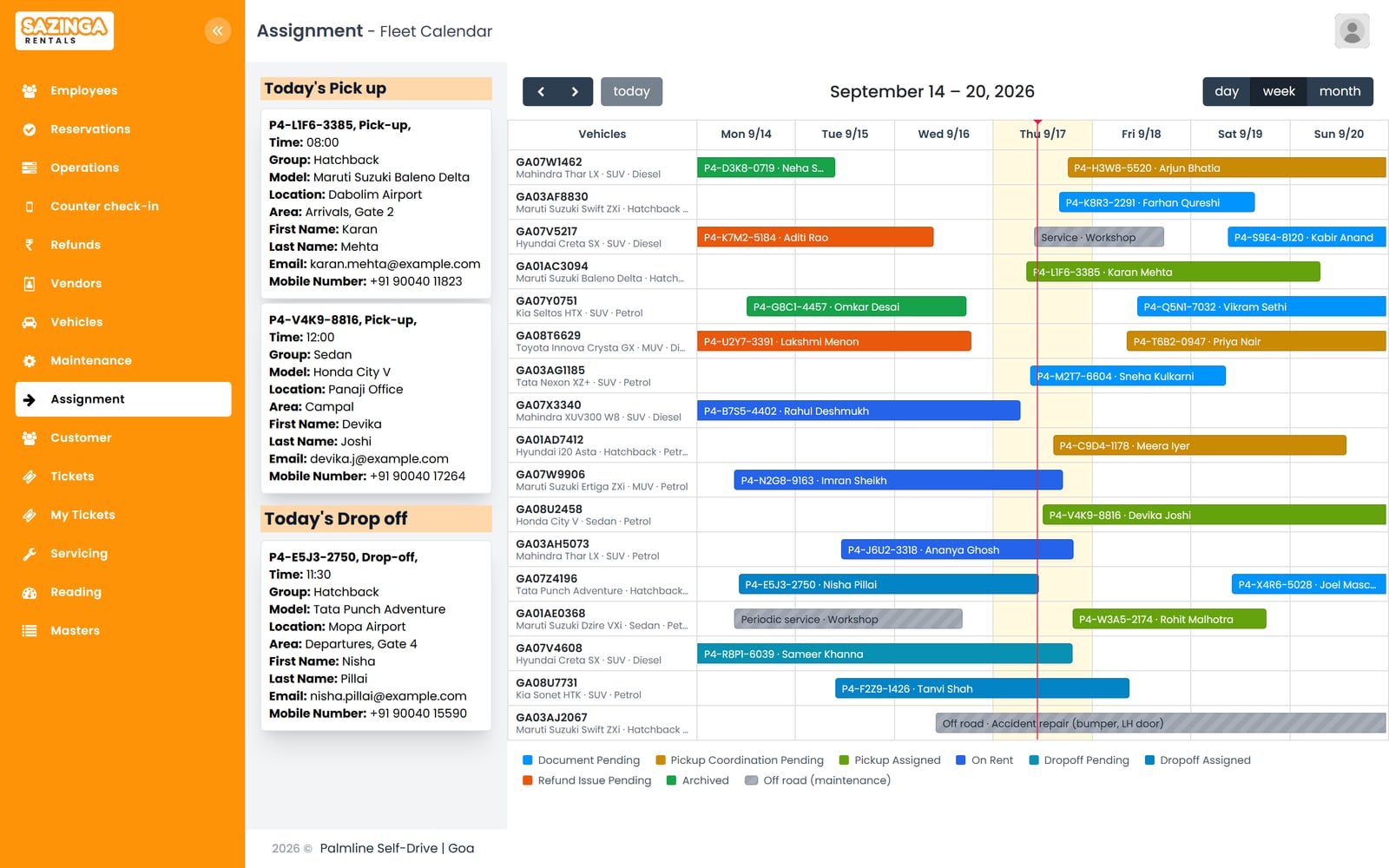
Rental operators lose money in the gaps. Availability sits in a diary that only one person keeps,
a vehicle is promised to a second customer while it is still out, a service falls due in the middle
of a confirmed hire, and partner commission is worked out from memory at the end of the month.
Sazinga Rentals covers the part of the business that starts once a booking exists and does not end
when the vehicle comes back: the handover, the condition it went out and came back in, the deposit,
the deductions against it, the fine that arrives three weeks later, and the refund that finally
closes the file.
What this replaces
A WhatsApp group for handovers, a folder of photographs nobody can find later, a spreadsheet of
deposits held, and an argument at the counter about a scratch. The last of those is the expensive
one, and it is almost always a records problem rather than a disagreement about the facts.
Why a booking’s status is computed rather than typed
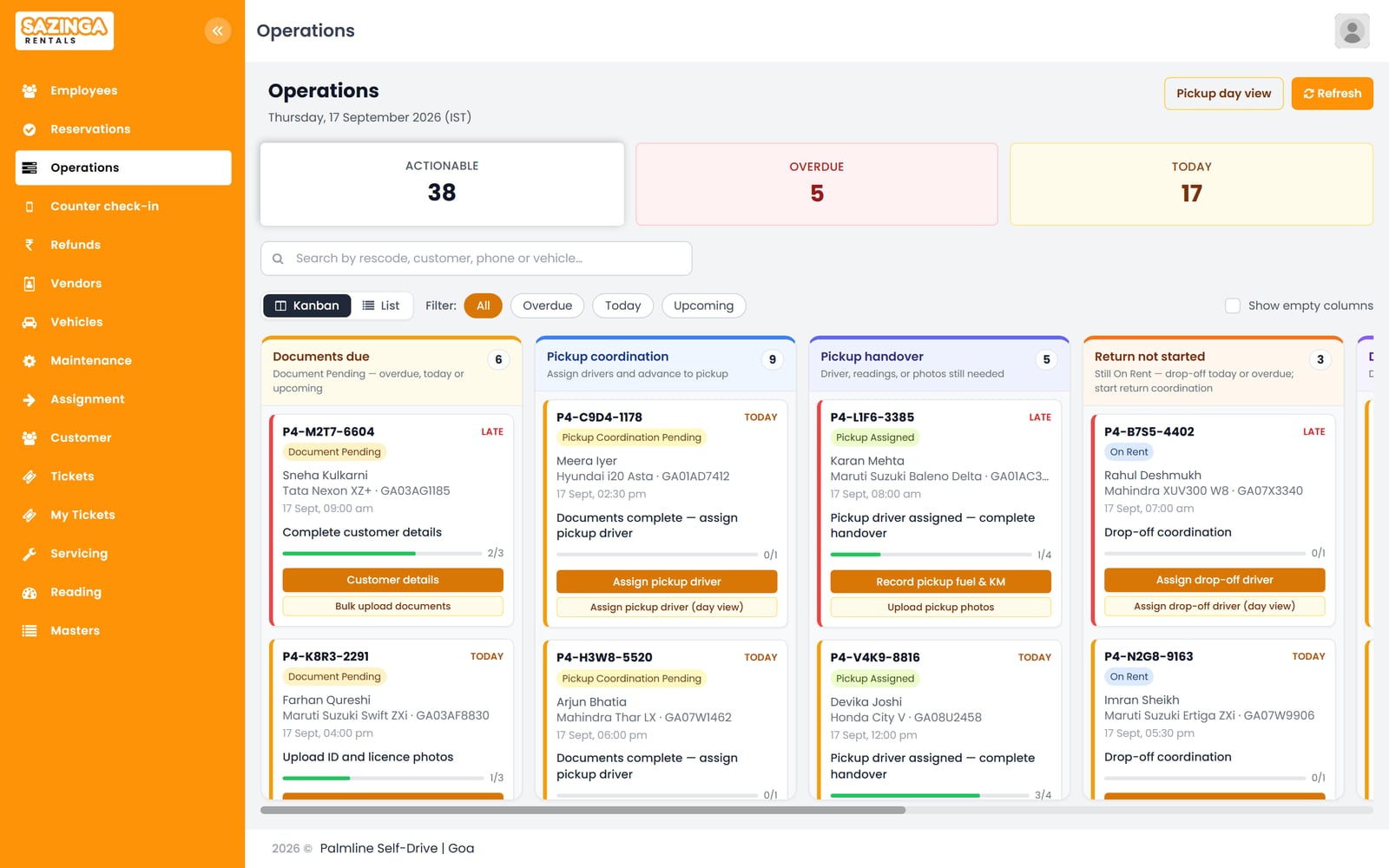
A rental moves through a defined sequence: documents pending, pickup coordination, pickup assigned,
on rent, dropoff pending, dropoff assigned, return pending, returned, and then the refund states
that close it — with cancelled and expired as the other endings. Twelve states, with the moves
between them defined rather than left open, so a booking cannot jump from documents pending
straight to returned because somebody picked the wrong item from a list.
More usefully, most of those states are derived from facts rather than set by hand. Whether a
booking is on rent is a consequence of the pickup leg having been handed over; whether it is
returned is a consequence of the dropoff handover and the closing odometer reading existing. A
status column that people are asked to maintain is a status column that
goes stale — so the terminal and money-related states are
protected, and the rest are recomputed from the records underneath them.
What a handover actually records
Each leg of a hire — taking the vehicle out, bringing it back — is its own assignment to a person,
moving from assigned to handed over. That is what makes “who gave this car to the customer, and
when” answerable months later.
Against each leg sit the photographs, and they are typed rather than dumped: exterior views, a
checklist capture, and any photograph flagged as showing damage. A damage photograph carries a
description and the fee attached to it, and can carry annotations marking where on the vehicle the
damage is. Odometer readings are captured at pickup and at dropoff, fuel level is held against the
tank’s capacity rather than as a vague fraction, and both feed the deductions later.
How the deposit gets settled
Money on a hire is a ledger, not a running total that somebody adjusts.
Every amount is an entry with a type, a direction, and a bucket that says what kind of money it is
— the rental itself, an administrative charge, the security deposit, an ad-hoc deduction, or tax.
Each type declares whether it is taxable, which is how the rental amount can carry its tax from the
booking engine while a fuel deduction or an additional-kilometre charge is taxed here, without
anything being taxed twice.
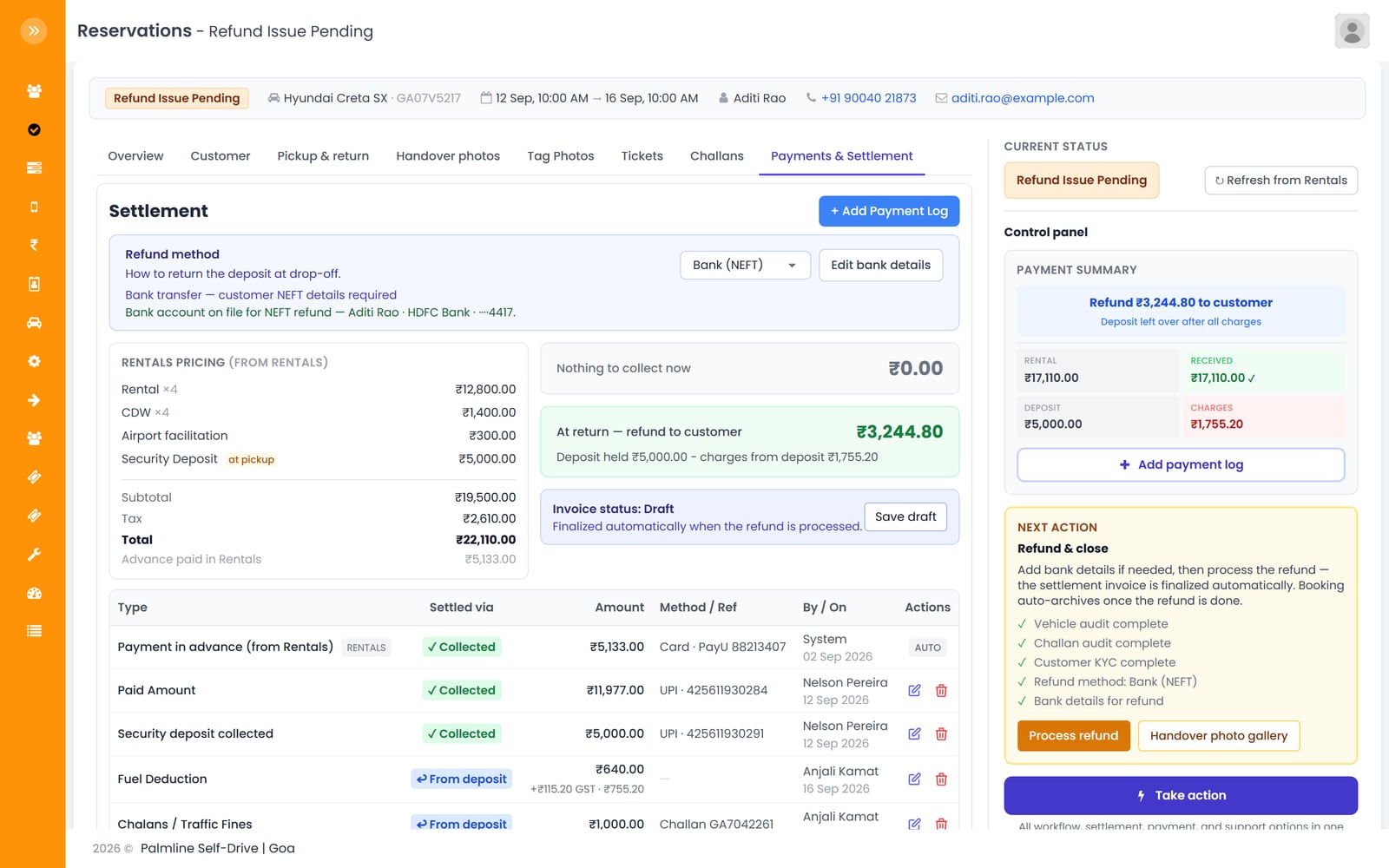
Settlement is then arithmetic over those entries rather than a negotiation. A deposit is held as an
entry, deductions are entries against it, and what is returnable falls out. The original booking
total is pinned in an immutable snapshot taken at the first sync, so a later re-price upstream
cannot quietly move the number the settlement was calculated from.
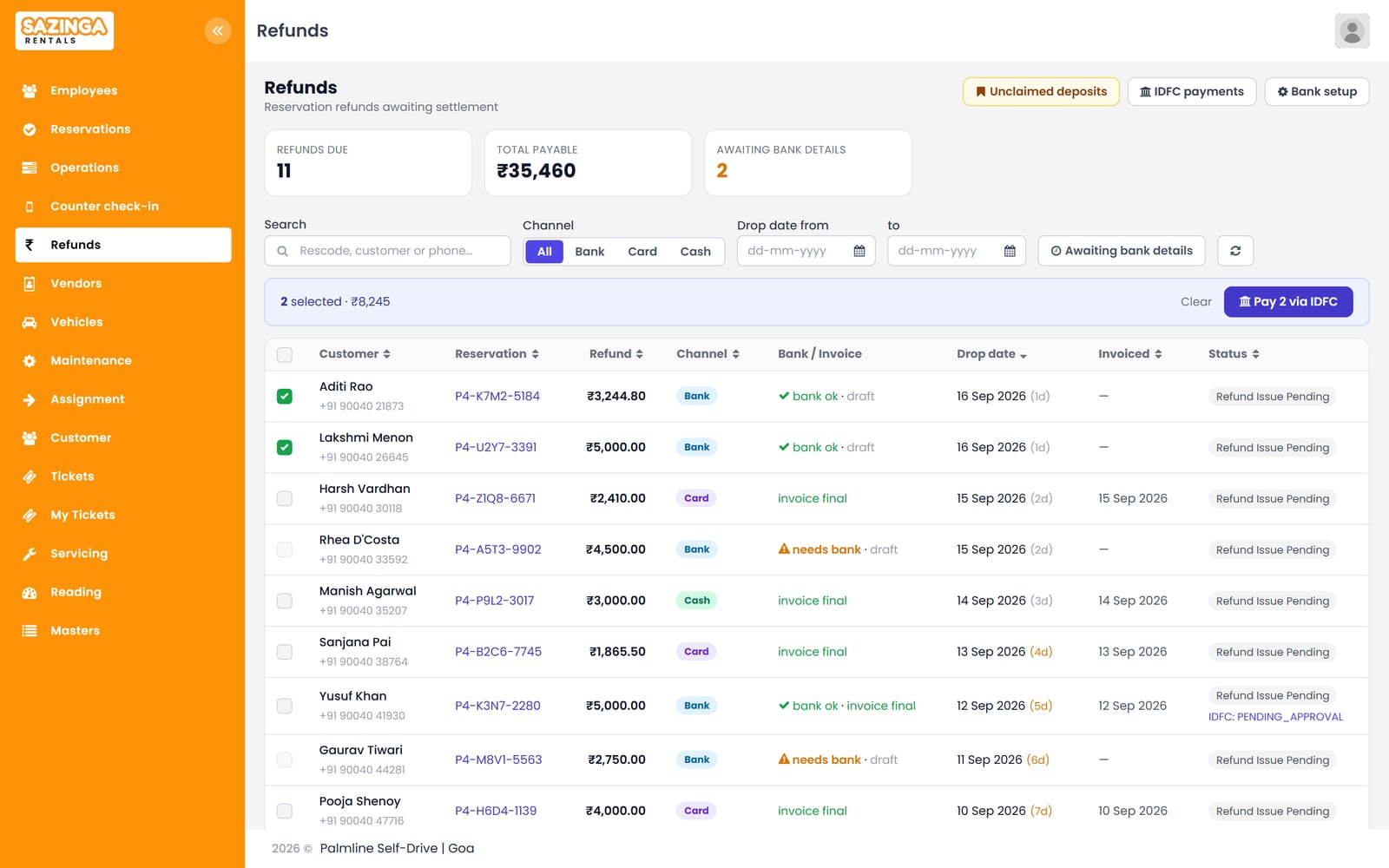
The refund itself is deliberately a separate record — amount, method, transaction reference, the
date it was paid and a status of its own. A refund that the arithmetic says is due is not a refund
that has been paid, and the system will say nothing rather than tell a customer money has been sent
when only a projection exists.
What happens when a challan arrives three weeks later
A traffic challan turns up long after the vehicle has been returned and the customer has gone, and
it has to be attached to a hire that is otherwise closed.
It is recorded against the reservation with the challan number, the date and place of the violation,
the amount, and the notice itself as a document. The interesting part is what it does not have:
there is no “reviewed” column. Whether a challan has been dealt with is derived from whether its
amount has been posted to the ledger — the act of settling it is the act that marks it settled. A
status field beside the ledger could only ever drift out of step with the ledger it is supposed to
describe.
How documents and servicing stay current
Every document a vehicle needs — registration certificate, insurance, fitness certificate,
pollution certificate, permit — is held with its type, issuer, serial number, the date it was
issued and the date it expires, along with the file itself and the amount it cost. Changes to those
records are logged, so a renewal is a history rather than an overwrite.
A subset can be marked shareable, for the documents a driver may need to produce at a check post.
That endpoint is gated on the server rather than in the interface: only documents that are active,
marked shareable, and not past their expiry date are ever returned, so a stale row still flagged as
shareable cannot leak an expired certificate.
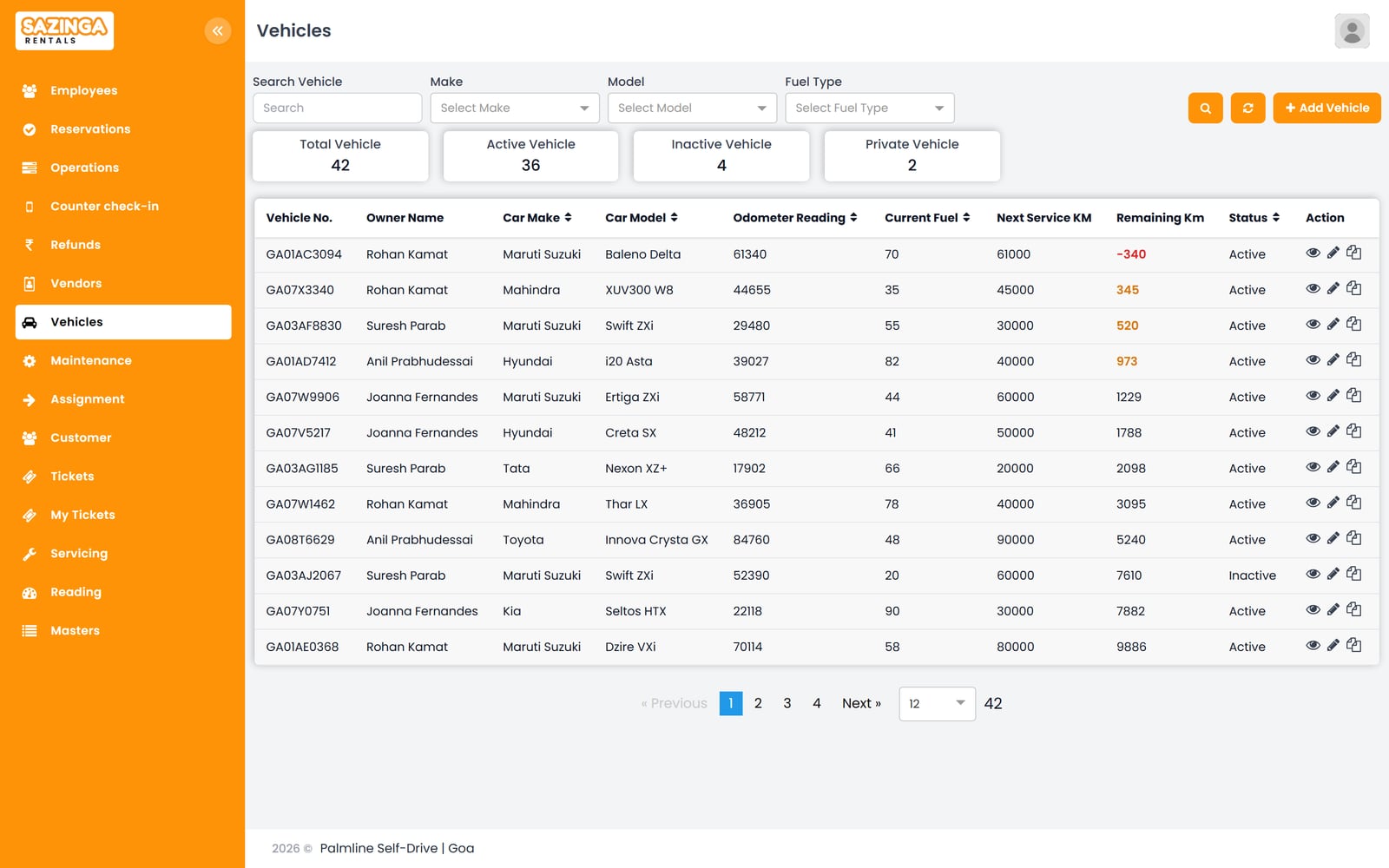
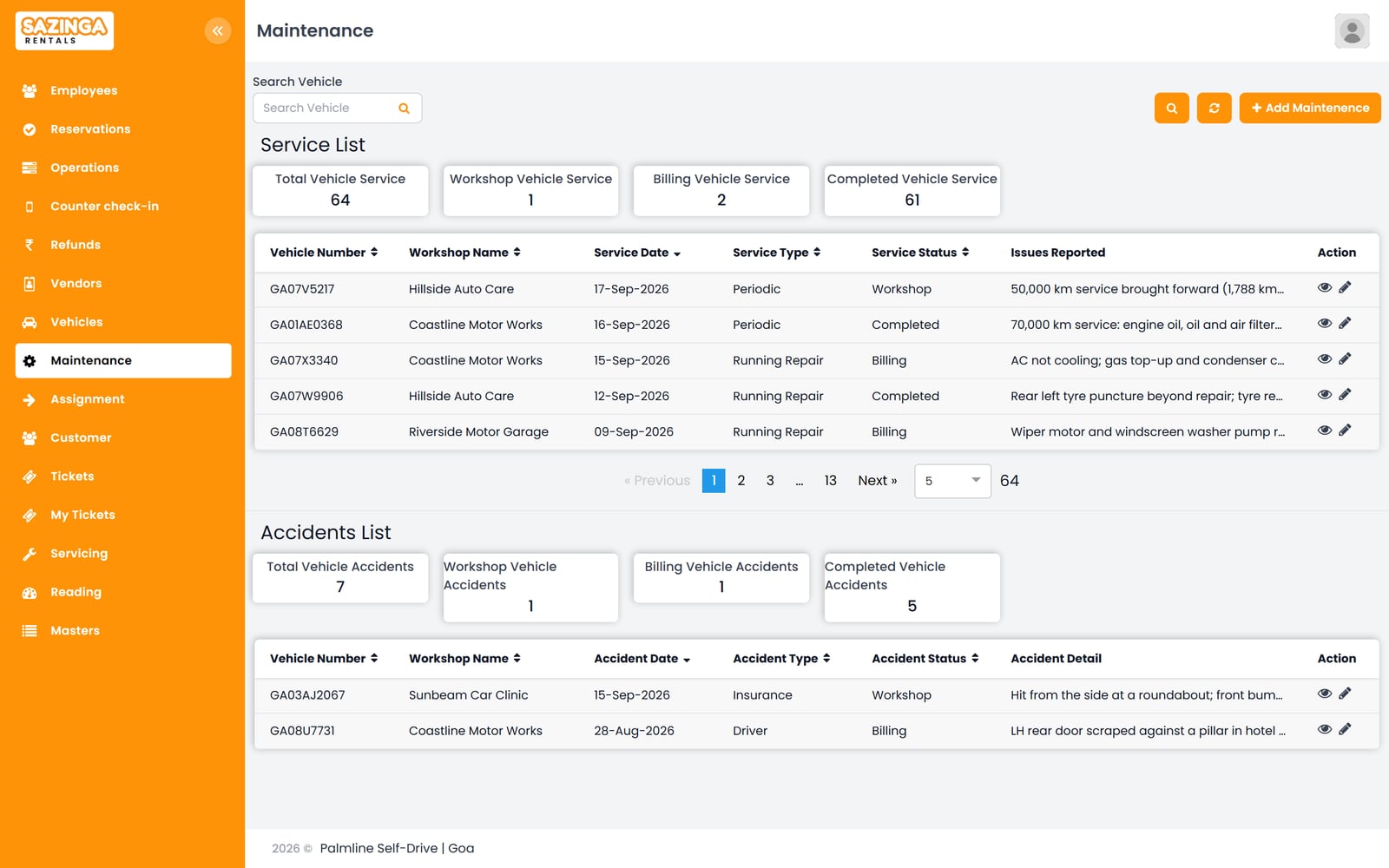
Servicing works off the odometer rather than the calendar. Each vehicle carries its service
interval in kilometres and the reading at its last service, so the next service due is a
calculation against the current reading — which is the number that actually determines whether a
service is due.
What it does not do
It is not a consumer booking website. The customer-facing funnel, the rate display and the
availability search that fills the calendar sit upstream of this; Rentals is the operations and
money layer that runs from a confirmed booking onwards, and it is integrated with the booking
engine rather than replacing it.
It is not an accounting package either. It produces invoices, tracks outstandings and settles
deposits; it does not keep your books, and the figures are meant to be exported to whatever does.
There is no telematics: no live vehicle tracking, no fuel-sensor integration and no
driver-behaviour scoring. Fuel and odometer are recorded by a human at handover, which is honest
about where the number comes from.
Where to go next
The vehicle rental industry page covers the operating problems
behind all of this, and the
vehicle rental operator case study covers one fleet in
detail. Operators who sell advertising space on the same kind of period-based calendar will find
the model familiar in Sazinga AdBoard.